Smart Conveyor Belt Monitoring & Mineral Size Analysis
Spot every oversize rock. Watch the material flow live.
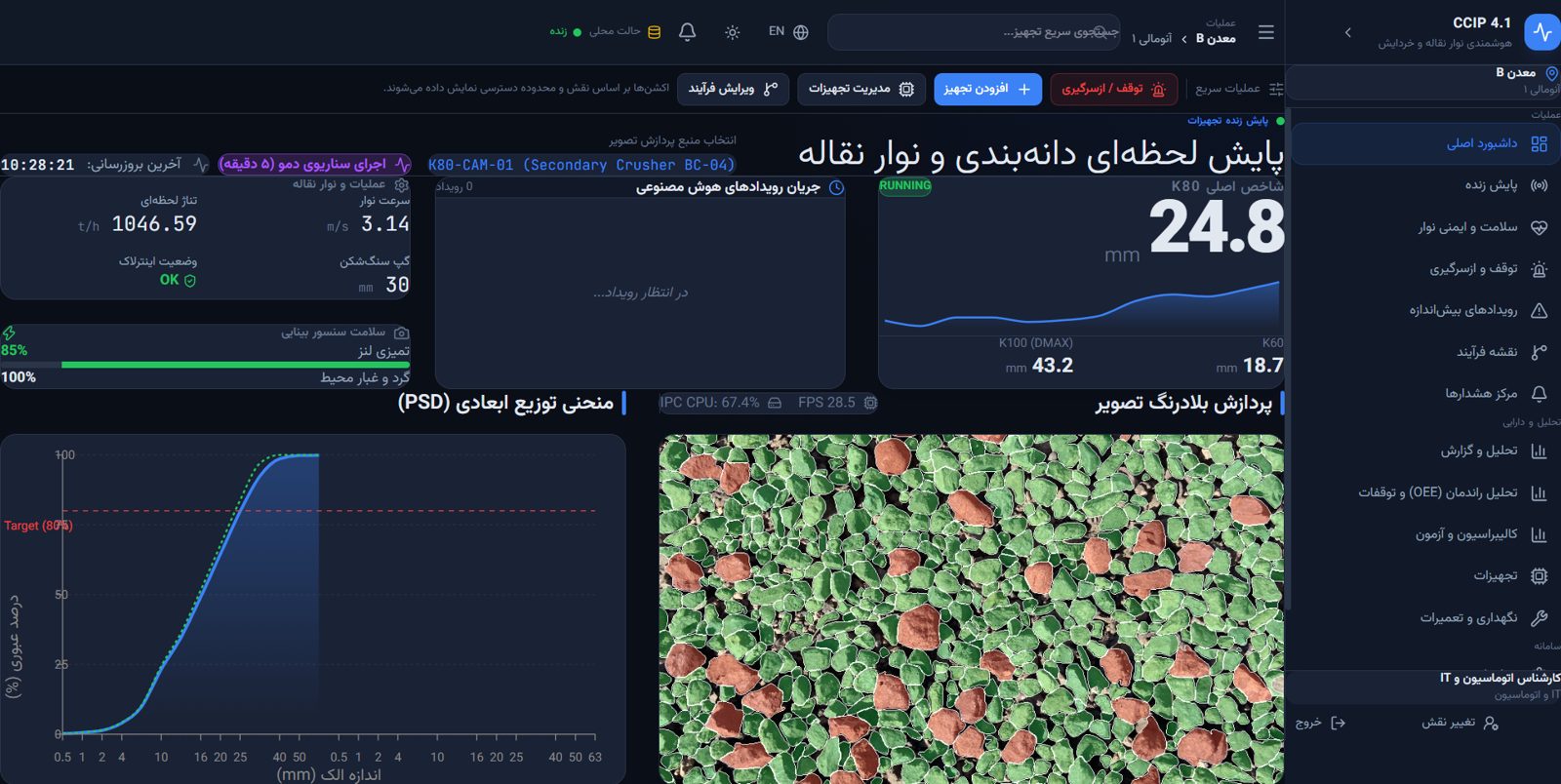
This smart monitoring system uses machine vision and AI to process images of mineral material on the move. It identifies oversize rocks, estimates particle sizes and analyses the size distribution. Combining image data with equipment operating data, it gives conveyor and crushing lines one place to monitor material flow, log abnormal events, manage alerts and analyse performance.
Large rocks pass along the belt, but too little about them is recorded.
On many mineral-processing lines, checking rock size and belt load relies on visual inspection, periodic sampling and scattered equipment data. These methods give no continuous picture of size distribution and can delay the detection of rocks larger than allowed. Without integrated, up-to-date information it is hard to analyse crushing equipment performance, follow abnormal events and let operators decide in time.
Machine vision turns material flow into data you can analyse.
The system takes images from cameras installed along the conveyor and uses image processing and AI to detect and separate individual rocks. The output gives size indices such as K60, K80 and K100, flags oversize pieces and draws the particle size distribution (PSD) curve. Alongside image analysis, belt speed, throughput, load state and equipment health appear on operations dashboards. Abnormal events are logged, and users can review line status through alerts, reports and equipment management.
Technical details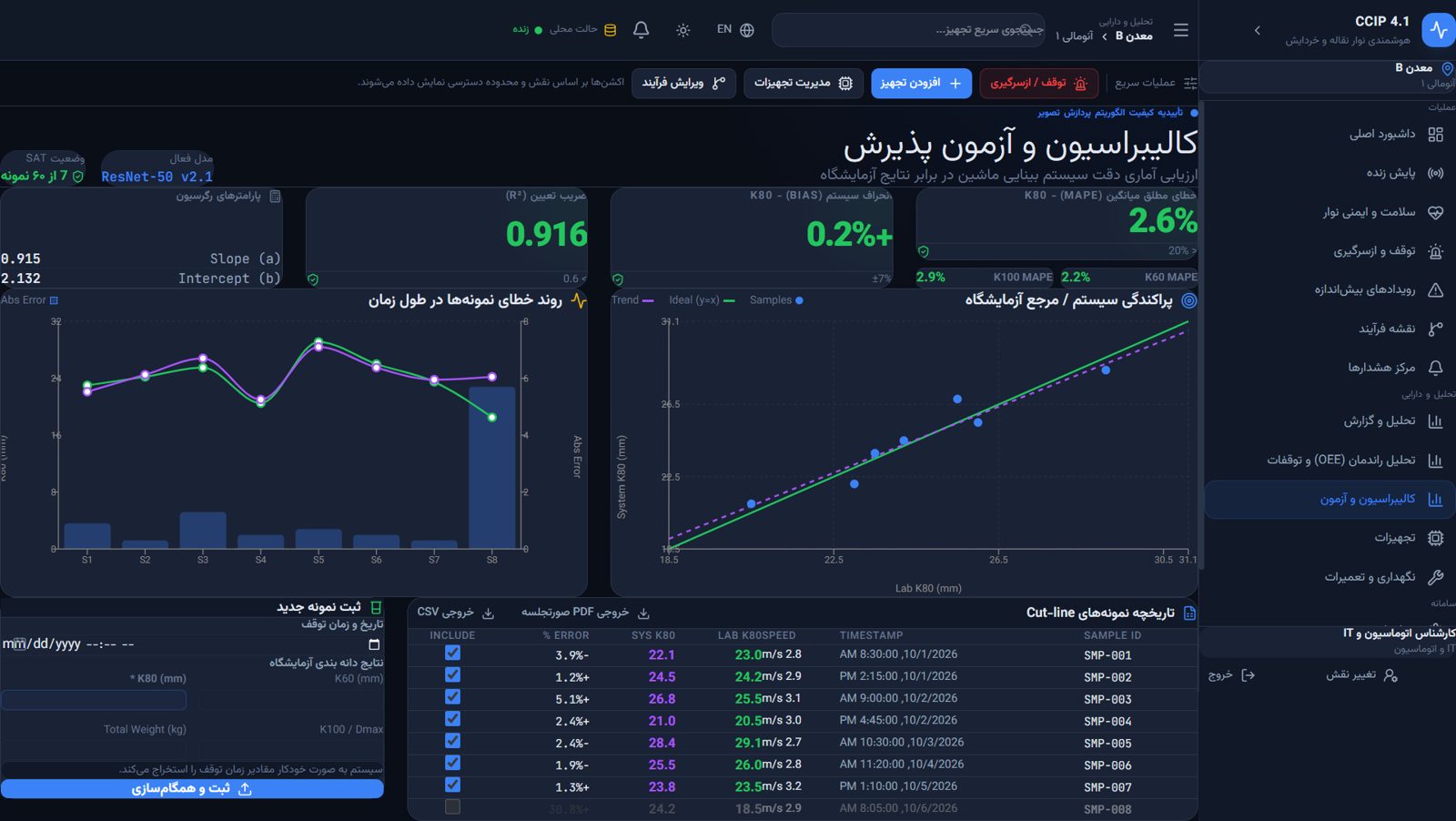
From belt image to operating information.
An integrated processing and monitoring flow for mineral transfer lines.
Technical details.
- Receive and display images from the belt-monitoring cameras
- Detect and separate rocks with machine-vision algorithms
- Detect oversize rocks and report the detection confidence
- Estimate the K60, K80 and K100 size indices
- Show the particle size distribution (PSD) curve
- Calibrate and compare system results with laboratory data
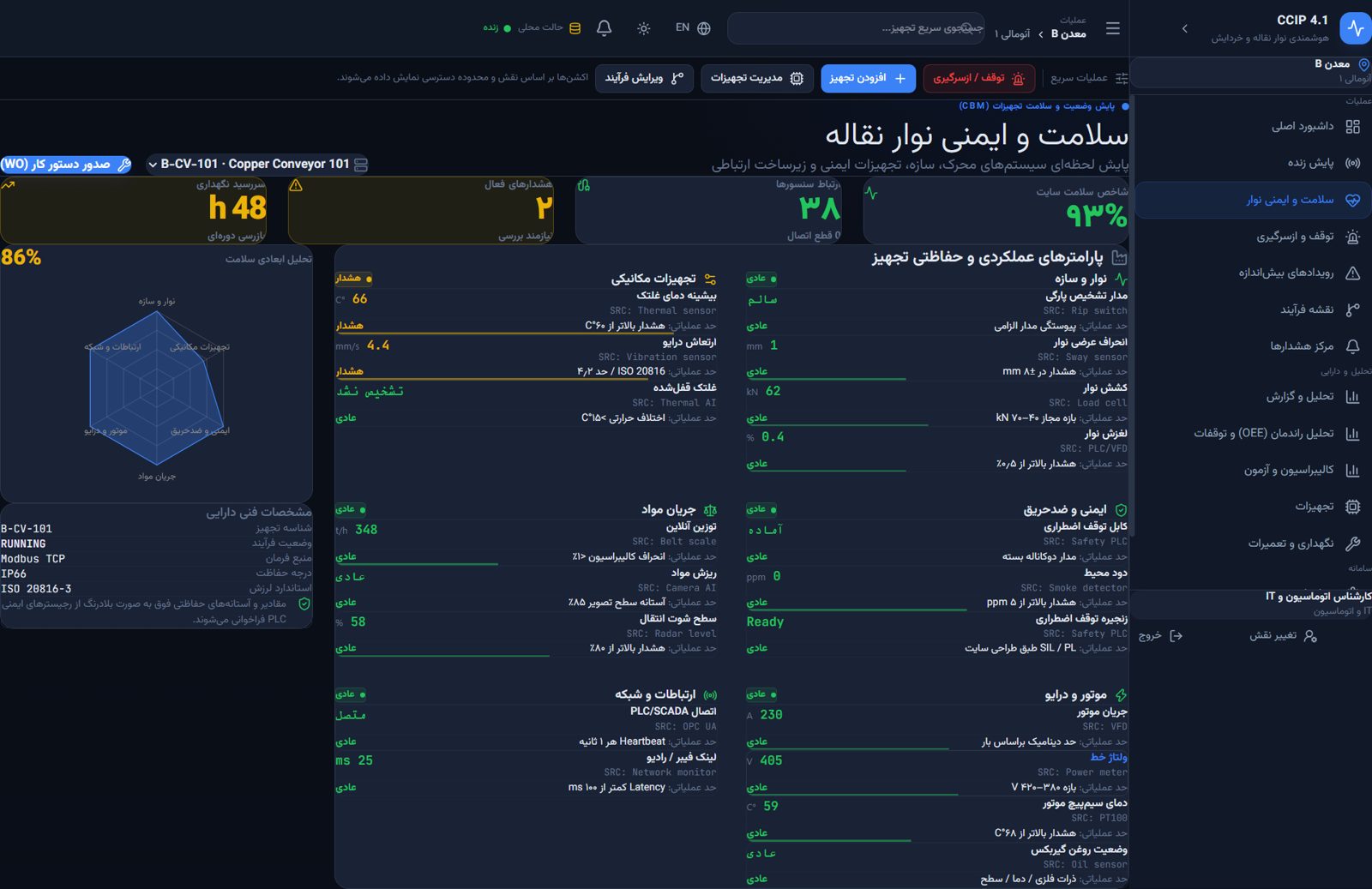
- Monitor belt speed, throughput and load state
- Show equipment status and health and safety parameters
- Log, classify and follow up abnormal events
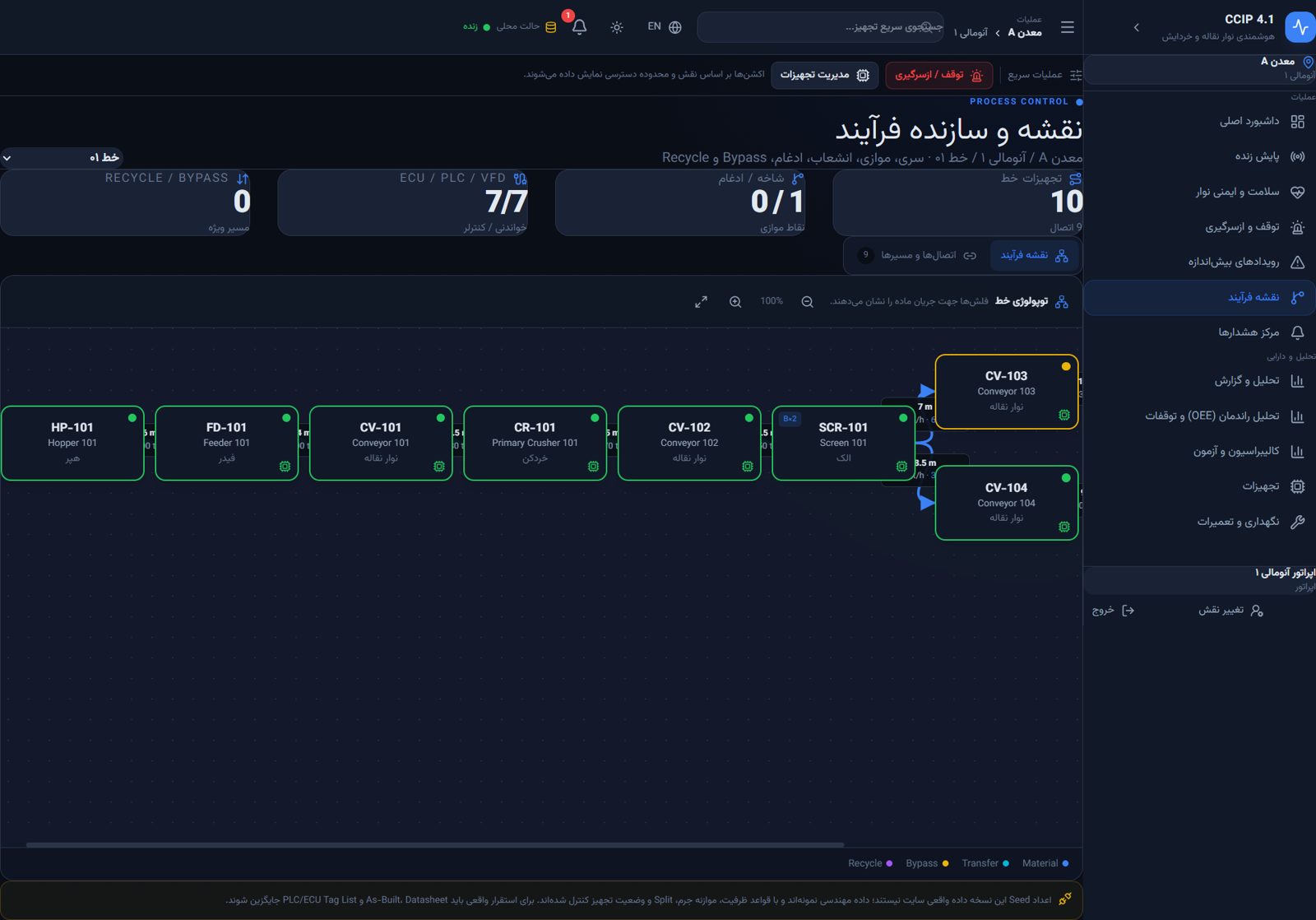
- Show the process map and how equipment connects across transfer and crushing lines
- Support stop-request, approval and operating-permit workflows
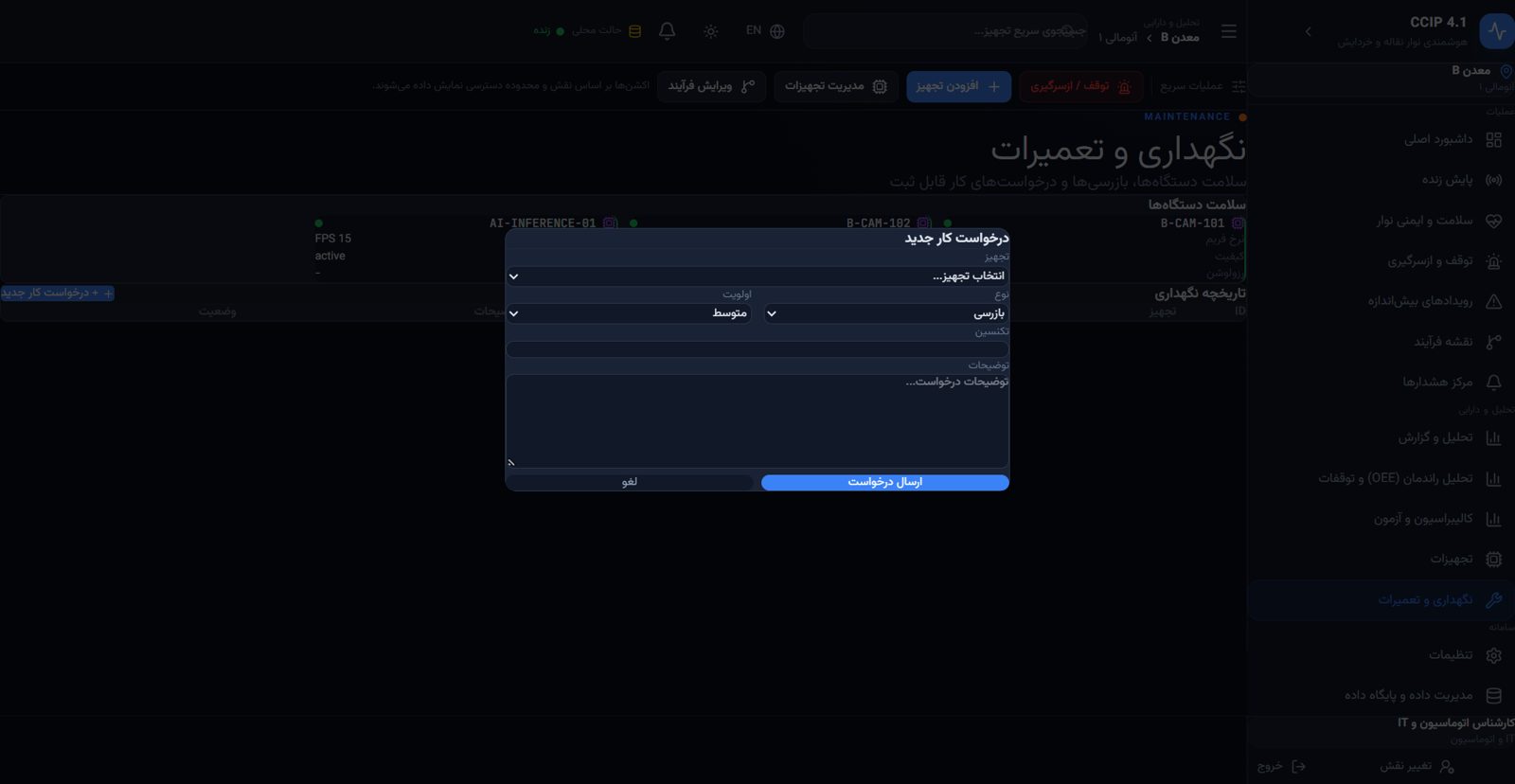
- Manage equipment, maintenance records and repair requests
- Analyse performance and produce management reports
- Configure data sources and connect to industrial control systems
Results are published after field validation.
The project is in development. Real performance results will be added here once tests and evaluation under mine operating conditions are complete. The planned evaluation covers oversize-rock detection accuracy, size-estimation error against the laboratory, processing stability, and performance under different belt loads.
The people behind it.
A multidisciplinary team of engineers, researchers and domain experts.
More from this project.
Visuals of the system and its components.
Smart monitoring for more lines.
The project aims to build an expandable base for visual monitoring of mineral material and for integrating data from transfer and crushing lines. Developing and validating the capabilities under real conditions will open the way to more equipment and more lines.
Discuss a similar project ZLAB
Part of the FANAP ecosystem
FANAP Advanced Technologies Laboratory